|
The Test: Benchmarking the Best Nest
Benchmarking against a current method of producing parts using real world requirements is the only efficacious way to determine if new methods, such as Vision Emulation and Multi-Dimensional-Combinatorial-Nesting technology, are indeed improvements. Always having the highest level of automated productivity and cost cutting technology is quantifiable. Quantify a specific number of parts that are actually used in production; only then can optimized manufacturing metrics be compared and the best nest discovered.
[see more]
|
|
|
|
Regional Manufacturing Expos : Cost-Effective and Hands-On
Conferences, Webinars, and Expos, oh my. Deciding which events are worthwhile for manufacturing engineers and buyers to attend sometimes feels like Dorothy in the woods en route to OZ. Too often tradeshows are for the benefit of exhibition companies, webinars to simply promote a software product, and conferences lack any dynamism or little more than a rehash of last year’s content..
[see more]
|
|
|
|
|
|
Two Years Later: A Look at the Demand Driven Supply Chain Technology
Materials and Plant Managers improve productivity through automation of repetitive, time-consuming management functions as well as elimination of waste built into manual kanban card process. In a Demand Driven Supply Chain (DDSC) there is instant availability of real-time inventory data as well as an automatic calculation of proper replenishment levels. Much has changed since first writing about Demand Driven Supply Chain issues and technology in the past two years since first authoring a feature for Automationmedia.com.
[see more]
|
|
|
|
|
Transactional Six Sigma Must Maintain Productivity Gains
Six Sigma projects are often hampered by the high cost of acquiring and managing data. Black Belts often invest significant effort in collecting data for the Define and Measure phases. But they risk losing those hard-won productivity gains during the Control Phase if process owners can not sustain costly and time-consuming data collection tasks over the long-term.
[see more]
|
|
|
|
PLC Training and Education
Recent studies claim that the global demand for automation propels the PLC market and, as we know, tied with any
technology comes its training and education. Currently the industry is concerned with minimizing the learning times and
cutting down the costs associated with the training and education, however in this competitive environment that the
industry is living, now, more then ever, there is the need to come up with fresh and inventive solutions.....
[see more]
|
|
|
|
With or without you?
If the Process Control vendor world was one great big outdoor rock concert, Honeywell would have to be U2. Both are absolutely huge and supremely confident, almost everyone is familiar with their line-up, most people take a liking to them, but not everyone cares for their bold strut or their particular brand of politics. The enduring parallel between the two, however, is that both redefine themselves through constant innovation to stay relevant within rapidly changing industries.
[see more]
|
|
|
|
Automation Proves Paramount in Food Sector Profitability
New food industry dynamics require that sustainability must be a priority; in an era of cost-cutting food automation, food operations professionals, from plant managers to quality managers, must implement innovative technologies and form alliances with outside experts. One of the central distinctions of food automation is developing the right mix of innovative niche food products and line expansions which produce the best bottom line impact.
[see more]
|
|
|
|
OPC and DCOM: 5 Things You Need To Know
OPC technology relies on Microsoft's COM and DCOM to exchange data between automation hardware and software; however it can be frustrating for new users to configure DCOM properly. If you have ever been unable to establish an OPC connection or transfer OPC data
successfully, the underlying issue is likely DCOM-related. This whitepaper discusses the steps necessary to get DCOM working properly and securely.
[see more]
|
|
|
|
Exporting To Europe Proves Manufacturing Profit Center for 2008
The dollar, having steadily lost value against major currencies over the past few years, has helped exports; the weak dollar will only continue to make local goods more affordable around the world and give exporters an advantage against otherwise competitive European rivals. From technology manufacturing companies to medical devices manufacturers, all are poised to experience significant international sales benefits in 2008 as long as the marketing support tools are positioned and measurable.
[see more]
|
|
|
|
|
There’s OPC in Them There Oil Fields
Anyone in the oil industry will have heard of the
Canadian Tar Sands. Alberta is the largest producer
of conventional crude oil, synthetic crude, natural
gas and gas products in Canada. The providence
is best known for its oil sands deposits located
in the north, which span over 40,000 square
kilometers and contains an estimated trillion barrels
of bitumen. That represents a lot of equipment,
spread over a vast area that require reliable realtime
data monitoring and control. Many companies
are using OPC connectivity to meet the challenges
associated with coaxing this oil out of the ground.
[see more]
|
|
|
|
Continued Process Improvement Cubed
Three years since their initial purchase, Follett Ice continues to demonstrate that replenishment-based supply chain is fundamental to business efficiency. Reduced inventory levels, supply chain integration, and increased turns all eliminate waste and serve as hallmarks for continued process improvement. Follett Ice’s senior purchasing agent, Jeff Craig wisely identified the key variables when selecting a demand driven supply chain three years ago...
[see more]
|
|
|
|
Winds of Change - Using OPC in Guaranteed Data Delivery for Wind Farms
Standardizing access with OPC supplies a better way to manage wind performance and control assets. OPC products that gather high-resolution, real-time data gives the end user far more capability to analyze and affect the operation of the wind farm, than the currently used technology. Using OPC HDA technology guarantees the data is always available, regardless of how hard the wind is blowing.
[see more]
|
|
|
|
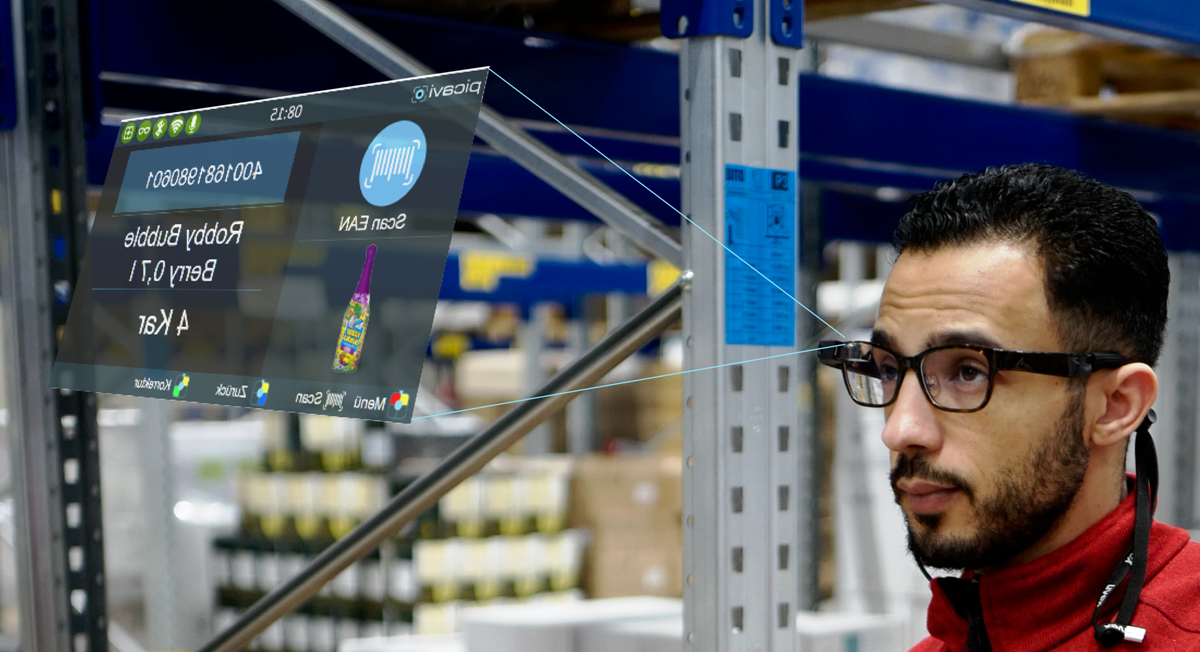
Lean Automation Optimization Found in the Mobile Warehouse
While change is often difficult, a change in technology systems, processes, and culture need not difficult for employees. Adoption of new lean solutions must be a central element of strategic planning and operations automation excellence. By minimizing the learning curve on new processes and technologies ..
[see more]
|
|
|
|
|
Woodworking Automation:Manufacturing Execution System Solutions
According Tony Parkinson, CFO of Hollywood Woodwork, in Hollywood Florida, “We were finding it harder and harder to hire experienced estimators that truly knew our industry and we were spending an inordinate amount of time developing estimators from within the company. We were concerned that ......
[see more]
|
|
|
|
VRM, Six Sigma, and Automation
Vendor Relationship Management or VRM is the reciprocal of CRM (Customer Relationship Management). VRM provides manufacturing enterprises a wide range of technological tools for efficient vendor interactions that benefit both the manufacturer and the vendor. In Lynne Hambleton’s new Prentice Hall text Treasure Chest of Six Sigma Growth Methods, Tools, and Best Practices, the author quickly defines that, “A method establishes the foundation for how work gets accomplished. It defines the who, what, when, where, by and how of a process; wherein a process describes a series of logically sequenced tasks to complete work.”
[see more]
|
|
|
|
ETO Manufacturers Learn to Track
Brunt Associates is an architectural millwork firm based in Wixom, Michigan. The company experienced significant growth and needed to upgrade its software system yet required a solution that could address the unique issues facing a company in the woodworking industry. “We are a carpentry and millwork company. We manufacture and install our own product,” said Brian Brunt, vice president. “Ours is a second generation, family-owned business. My father, Denis Brunt, founded the company over twenty years ago, originally as a carpenter contractor. I took the company into manufacturing and architectural woodworking, quite simply because the market was there. All of the jobs we were bidding had components of woodworking in them. It just made sense to start manufacturing.”
[see more]
|
|
|
|
Lean Logistics Hiring Practices Key to Higher Energy Costs
Distributors are working overtime to develop more cost-effective processes and strategies to enable their customers on both ends of the supply chain to operate without incurring sizeable increases in transportation and logistics costs. The scope of this challenge is significant. According to a recent study sponsored by the Council of Supply Chain Management Professionals (CSCMP) U.S. business logistics costs increased $156 billion from the year before — or 14 percent — to a total of $1.18 trillion total. This dramatic increase represents the largest year-to-year change in more than thirty years, according the organization which tracks trends in transportation, inventory-carrying and total logistics costs.....
[see more]
|
|
|
|
Creating Secure OPC Architectures
OPC represents an easy to use, ubiquitous, reliable method of communication. As a result of it being based on DCOM; it is well known by security professionals, but unfortunately is also known by virus writers and hackers. Layers of security mean that should one part of the system be compromised, the rest will remain secure. Typical layers used include: physical business layer security, physical process layer security, exposure to the internet, business to process layer traversal, OPC architecture security, DCOM configuration, login security, firewalls, etc......
[see more]
|
|
|
|
The Practical Organization of Automated Software Testing
Automation is not an island unto itself. It requires a solid testing infrastructure and a thoughtful software testing life cycle that are both supported and valued by the corporate culture.
To begin, there is the automated testing system itself. It must be designed to support reusable module and one point maintenance. It must be very flexible and easy to update.
The testing infrastructure includes a dedicated test lab, a good bug tracking system, standard test case format, and comprehensive test plans.
[see more]
|
|
|
|
Automation: Salary Survey Results for 2007
The results of our 2007 salary survey are in with interesting observations and Good news! In two years, the average overall salary jumped from $76,926 to $83,623...roughly a 4% increase per year. It pays to obtain an advanced degree (or even attend some graduate school)...those with an advanced degree have a $9,993 higher annual salary ($93,631) than those with a bachelor's degree ($83,638). An overwhelming percentage (79%) of respondents said they were either very .....
[see more]
|
|
|
|
ERP for Process Manufacturing is Rare
Process manufacturing is a relatively small market compared to markets such as discrete manufacturing, retail and professional services; the size of the market is commensurate with the few quality software solutions for process manufacturers, whereas discrete manufacturing, retail and professional services have hundreds of software solutions, from entry level through Tier One.
[see more]
|
|
|
|
Reducing Energy Costs: Drying Efficiently
The economic optimization of dryer operations requires improvements in both the routine continuous operation and changeovers. In both operational modes, the real-time visibility of processing provides the key to optimization.
The optimization processes during changeovers are complex and nearly impossible to get perfect, however the largest improvements are found when correcting avoidable human mistakes. These errors are best discovered with real-time visibility of operations
[see more]
|
|
|
|
OPC – Paving the Road to Interoperability
When the majority of the top Fortune 500 companies are using a technology, it’s usually safe to say it’s more than just a coincidence. Companies like ExxonMobil, Wal-Mart, Ford, General Electric, Dell and Pfizer span a wide range of industries and businesses who are using OPC to solve the their problems. So what is driving OPC?
[see more]
|
|
|
|
Integrating OPC into Building Automation – The Latest Trend
OPC (OLE for Process Control) is a published connectivity standard that has become the de facto standard embraced by the process control industry because of the tremendous benefits it offers. However, these benefits are not unique to process control; they can be seen within other market segments such as discrete manufacturing, equipment monitoring and control, utilities and, recently, building automation and security.
[see more]
|
|
|
|
A Distributor Turns A Network Disaster into Operational Success
Being able to quickly respond to customer requirements is key to a distributor. Having reliable data that is easily accessible is a vital part of any distributors business. Don Beisswanger, President of Pacific Southwest Sales, faced a very unfortunate situation. His current business software was suddenly inoperable and he needed to find a software solution that would be quick to implement as well as sufficiently robust enough to accommodate the company’s expansion for years to come......
[see more]
|
|
|
|
Effective Product Development Outsourcing - Factors for Success
Outsourcing is much more than a trend. Companies, in their zeal for a competitive
edge, outsource virtually all non-core activities including manufacturing, IT, accounting,
sales, human resources and other functions. Engineering and product development are
among the last areas affected by this phenomenon. Can new product development
(NPD) outsourcing be effective and economical? Why are companies doing it? Is it
worth it? What are the issues that prevent businesses from maximizing potential?
[see more]
|
|
|
|
Winning the Battle for Interoperability
Achieving interoperability of some products is more like a running skirmish against hostile opposition -- painful and costly. Getting all sides to comply with the rules and best practices of interoperability can be an uphill battle at times. To combat the problem, the OPC Foundation has created the OPC Enhanced Certification Program...
[see more]
|
|
|
|
Putt's Law and the Successful Technorat:How to Win in the Information Age
Putt's Law: "Technology is dominated by two types of people: those who understand what they do not manage, and those who manage what they do not understand."
Written by an industry leader in R&D management, this title examines the above law by following the (often humorous) business development of both types of individuals in a Research and Development setting.
[see more]
|
|
|
|
Molding and Extrusion Require Skilled Labor
Since much of the molding and extrusion has been sent offshore, the specific skills required have migrated to other process industries and have adapted outside of plastics manufacturing. With fewer production facilities in the US, the pool of prospective recruits has diminished significantly.
[see more]
|
|
|
|
Document Searches Should NOT Defy Lean Operations
Tom sheds some light about the average information worker who spends more than thirteen hours per week creating documents and nearly seven hours per week organizing documents;
an additional four hours per week are spent managing document routing
and another ten hours per week searching for information. All this time searching for documents is negatively impacting the productivity, bottom-line, and lean operations of most North American manufacturers.
[see more]
|
|
|
|
Continuous Process Improvement (CPI) Algorithm
A lot of papers, articles, and guides have been written over the recent years addressing Continuous Process Improvement (CPI). However very few address methodologies related to the improvement of the process itself, that is, the processing of the metrics used to measure the effectiveness of a process. The methodology proposed in this paper can be applied to any processes i.e. manufacturing, management, software development, financial, etc.
[see more]
|
|
|
|
Compliance for Dairy and Food Processing Leads to Lean Automation Advancements
Tom sheds some light on a need for technology solutions which provide real-time operations intelligence to provide dairy processing plant management and staff with visibility of product loss, wasted energy, or other inefficiencies, allowing them to take timely corrective actions......Tracking of all product flows, all equipment uses, CIP and other non-production as well as production modes, and all possible co-mingling of products or contaminants is core to the functionality of safety and automation in the dairy industry.
[see more]
|
|
|
|
Lean Warehouse Control Systems Transform Distribution Centers
Production losses, increased cost, and inefficient pick and pack methods, can drain capital resources and precious time. Getting the advantage and sustaining that effort, it is essential to streamline the order fulfillment rule process from time of order receipt to the time of shipping. Efficiently organizing order fulfillment rules and procedures can reduce cost, reduce order cycle time, and optimize labor......
[see more]
|
|
|
|
|
|
Moving from “Just in Case” to Just-in-Time
To ensure there were enough raw materials for production, Superior Quality Foods operated “Just in Case”, rather than Just-in-Time. Although the company was growing, poor inventory control was impacting profitability. Albert Barriga, vice-president of operations, explained the problem: “We just didn’t have any confidence in our inventory control systems. We would always double check regardless of what the system said.”
[see more]
|
|
|
|
Choosing the right Process Calculation Solution
Dane examines the various Process Calculation Solutions and pro and cons of different OPC Calculation Engines. Process Calculations can add valuable insight into how a plant, process, or unit is functioning. This can lead to higher efficiency, reduced waste, more effective maintenance, higher quality, reduced emissions, quicker turnarounds, and reduced energy usage……
[see more]
|
|
|
|
Facing Competitive Global Manufacturing
More than fifty years ago, 1952 to be precise, B&K Corporation (with plants located in Saginaw and Fenton Michigan) began designing and building assembly and test systems for the automotive industry....
[see more]
|
|
|
|
|
|
|
Industrial CRM: An Area of Neglect
With up to ten years of continued process improvements on the plant floor, back office, and distribution operations, manufacturers have finally arrived at the front door of customer relationship management (CRM). Still engineering and operations focused, many senior manufacturing executives are strongly resistant and visibly uncomfortable.....
[see more]
|
|
|
|
Booming MES - Grand Challenge$ - Grand Opportunitie$
Now as the infrastructure of MMI-Scada widely exists, MES applications are easier to implement, and can easily relay data and information up and down the enterprise. MES can also be used for tracking purposes, as it can produce reports detailing the raw materials that went into an item, as well as each process it went through....
[see more]
|
|
|
|
ERP Suppliers Focusing Vertically
ERP (enterprise resource planning) software vendors can no longer attempt to be everything to everyone. To better serve their manufacturing clients and survive economically, ERP vendors are employing a variety of vertical marketing segmentation tactics to position themselves as leaders within a specific target market....
[see more]
|
|
|
|
Secure your Plant Data with SSL or VPN
Industry users are concerned about how to transfer senstive plant data and what are different secure ways. Main stream Web-Based Tools for accessing, analyzing and visualizing Production information with sophisticated trending and reporting capabilities started to work on it and many already offering Secure Sockets Layer....
[see more]
|
|
|
|
Component Based Rapid OPC Application Development Platform
OPC /3/ has changed the world. It has made it possible to use device and equipment data in PC applications
without the need to write vendor specific device drivers, etc. However, this is only the beginning: it will still
require a lot of work before the applications are built, because software development is complicated and a typical
OPC application needs to do a lot more than just communicate with an OPC Server...
[see more]
|
|
|
|
A NEW Vision - Industrial robots once were blind, but now they see
They possess a human’s ability to see, adjust to changing environments and plan ahead. When combined with a machine’s accuracy and untiring efficiency, significant manufacturing efficiencies are realized.”..............“Manufacturers have been spending billions of dollars each year on custom-made, complex, accurate fixturing devices to present parts to blind robots for processing....
[see more]
|
|
|
|
A growing Ethernet Challenge on the Plant Floor
There is a growing challenge on the plant floor if you haven’t experienced it yet, I am sure you will soon. A study by ARC predicts that the number of factory floor devices with an IP address is going to TRIPLE in the next four years and those devices are pushing lower and lower into the controls architecture… from systems, to sub-systems down to sensors… so Ethernet equipment with an IP addresses are increasing rapidly....
[see more]
|
|
|
|
The Lord of the Industrial Ethernet Ring
Ethernet has become nearly as common on the factory floor as PLCs. In many cases, along with this need for Ethernet connectivity is the need for fault-tolerant network redundancy. Automation and control engineers have been forced into this IT domain and really don’t want to get too involved with the idiosyncrasies and maintenance of Ethernet networks, especially redundant networks.....
[see more]
|
|
|
|
Intelligence in a New Age
Evolution took millions of years to progress to the development of primates and then Homo sapiens. Over the past ten thousand years, intrinsic human intelligence has changed very little - Socrates would probably have scored at genius level on the tanford-Binet intelligence test.
[see more]
|
|
|
|
New Coriolis Technology solves traditional flow measurement problems
Coriolis technology offers unprecedented accuracy and reliability in measuring material flow.
It may be the most superior flow measurement technology. However, conventional Coriolis meters have had one significant limitation: They haven't performed well in measuring two-phase flow conditions, flow that involves a combination of gas and liquid mass.
Two-phase flow can cause process interruptions and measurement inaccuracies that can significantly affect production and profitability. Recent developments in digital Coriolis technology overcome .....
[see more]
|
|
|
|
Power over Ethernet - The Industrial Opportunity Today
A Position Paper by GarrettCom, Inc.
May 2005
The Power over Ethernet (PoE) standard, which was adopted in June of 2003, allows users to power devices over Ethernet cabling. It was originally developed to support wireless technology in areas where the cost of providing – or the physical impossibility of deploying – electrical wiring limited its deployment potential. As such, PoE has contributed to wireless market growth because it simplifies the RF survey task: access points can be easily moved because the requirement of locally-accessible AC power is removed.
[see more]
|
|
|
|
The NEW GE Corporate Culture
Under former CEO Jack Welch (now retired), the skills GE prized most were deal-making, cost-cutting and efficiency. In 2002 CEO Jeff Immelt, then 46, was Jack Welch's anointed successor. Now in a vastly different business environment, Jeff Immelt is turning GE's culture upside down.
[see more]
|
|
|
|
The NEW Honeywell Culture
The "old" Honeywell had developed over the past century as a respectable, though plodding, Minneapolis-based company. It merged with Allied Signal and was almost bought by GE.
Now under the leadership of CEO David Cote, Roger Fradin (ACS) and Jack Bolick (Process Systems), how is the NEW Honeywell doing?
Weblog on this topic Honeywell Weblog
Go visit the Honeywell weblog.
Read the comments from many others, giving their own views and feedback. And you may wish to weblog your own comments.
[see more]
|
|
|
|